概述
In the ever-evolving world of sneaker design, few techniques capture attention and emotion quite like gradients and multi-color splicing. These methods transform a simple shoe into a dynamic piece of wearable art, blending colors seamlessly or juxtaposing bold hues to create visual depth and movement. Gradients evoke natural transitions—like sunsets or ocean waves—while multi-color splicing, often called color blocking, delivers sharp contrasts that make statements on the streets. As sneaker culture continues to fuse streetwear, performance, and high fashion in 2026, mastering these techniques has become essential for designers, customizers, and collectors alike. Iconic examples include the Nike Air Max 95's legendary gradient uppers, which have seen revivals like the 'Reverse Gradient' and 'Grey Gradient' celebrating its 30th anniversary, proving the timeless appeal of smooth color flows. On the splicing side, bold color-blocked Dunks and Sambas dominate trends, offering endless styling possibilities. This article dives deep into the practical and creative aspects of gradients and multi-color splicing, providing actionable insights to elevate your understanding and application of these powerful design tools in contemporary sneaker culture.
Understanding Gradient Techniques in Sneaker Design
Gradients in sneaker design create smooth transitions between colors, adding dimension and a sense of motion to the upper. Unlike flat color applications, gradients mimic natural phenomena, making shoes feel alive and premium. Designers often use airbrushing for precision or dip-dyeing for organic effects on canvas materials. For instance, the classic Nike Air Max 95 features layered mesh panels with fading tones from dark to light, enhancing its wave-like aesthetic inspired by human anatomy and natural landscapes. In custom scenes, hand-painted gradients on models like Nike Blazers or Air Jordan 4s involve building layers with acrylic paints—starting with a base color, then blending mid-tones using wet-on-wet techniques to avoid harsh lines. A key practical tip: always work in thin, multiple coats (4-5 layers) rather than heavy applications to prevent cracking and achieve buttery smoothness. In 2026 trends, ethereal AI-generated gradients blend dusty rose into periwinkle and mint, seen in experimental drops, pushing boundaries beyond traditional tools. For aspiring customizers, practice on scrap leather first, controlling air pressure or dye concentration to perfect the fade. This technique not only boosts visual interest but increases perceived value, as seamless blends signal high craftsmanship in both production and custom markets.
Popular Gradient Colorways and Their Impact
Certain gradient colorways have defined sneaker history and continue to influence trends. The Nike Air Max 95 'Neon' original gradient from 1995 set a benchmark, with recent 2025-2026 releases like the 'Reverse Gradient' and tonal grey versions celebrating anniversaries and proving enduring popularity. Other standouts include sunset-inspired dip-dyed Air Jordan 4 customs, transitioning from orange toes to blue-purple heels using Rit dyes for a natural fade. Puma's City Gradient and Nike's Mind 001 in blackened blue gradients showcase how brands experiment with tonal shifts for modern appeal. These designs impact culture by offering versatility—gradients pair effortlessly with streetwear outfits while standing out in photos. Data from resale platforms shows gradient Air Max models consistently hold or appreciate value due to rarity and visual drama. For collectors, seek limited drops featuring subtle shifts like black-to-red lava flows on Air Max Plus. Practical advice: when hunting or customizing, prioritize color harmony; analogous schemes (close on the wheel) create calming gradients, while complementary contrasts add energy. Mastering these helps understand why gradients remain a staple in 2026's maximalist yet sophisticated sneaker landscape.
Mastering Multi-Color Splicing (Color Blocking)
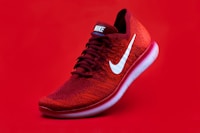
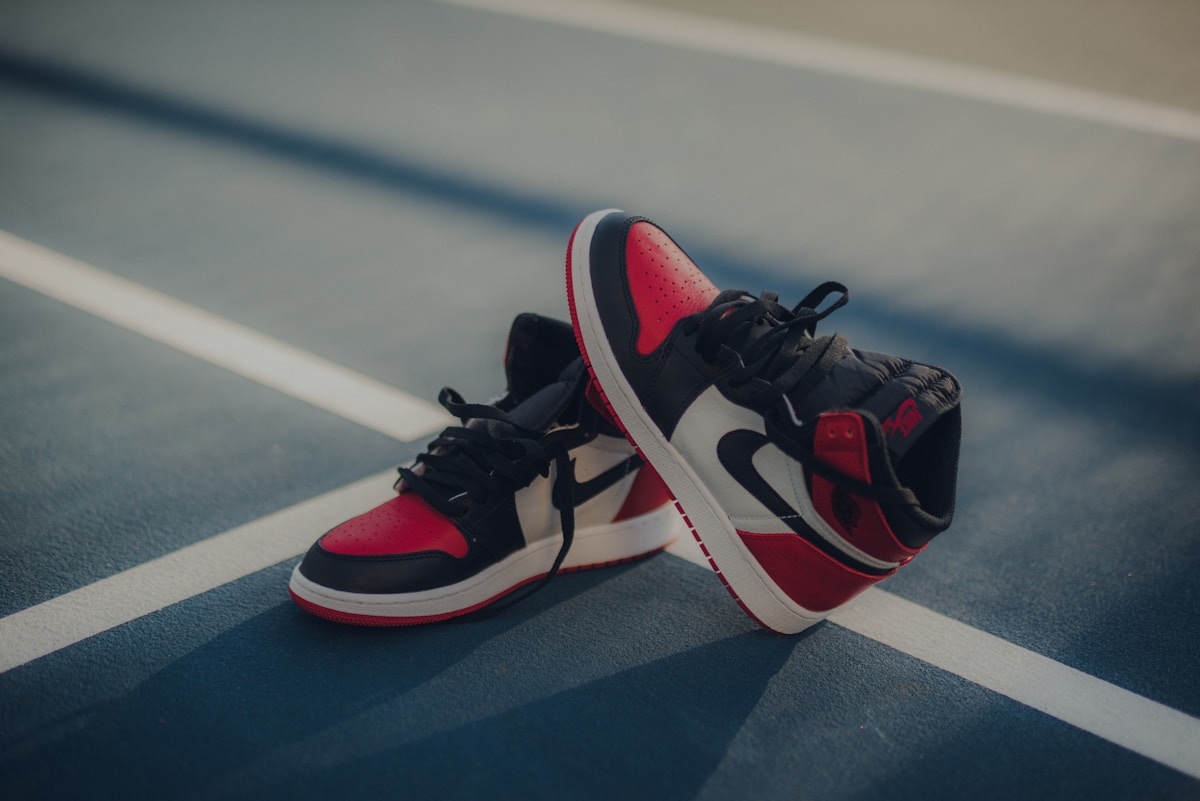
Multi-color splicing, or color blocking, involves piecing together distinct color panels for bold, geometric contrast. This technique shines in sneakers like Nike Dunks and Adidas Sambas, where panels on the toe, side, and heel create visual balance or disruption. Effective blocking follows color theory: use complementary colors for high energy or analogous for harmony, always anchoring with neutrals. For example, University Red and white Nike Dunks use classic blocking to make the Swoosh pop against clean bases. In production, designers map panels on 3D models to ensure proportions—typically 60-30-10 rule for dominant, secondary, and accent colors. Customizers replicate this with precise cutting and stitching or overlays. A pro tip: maintain symmetry unless asymmetry serves the design intent, and test mockups in grayscale first to check value contrast. In 2026, trends lean toward maximalist blocking with metallics and brights, as seen in Fendi and Dries Van Noten low-runners. This method excels at storytelling—bold splices convey attitude in street culture while remaining wearable. Apply it thoughtfully to avoid chaos: limit to 3-4 colors max for cohesion.
Combining Gradients and Color Blocking for Advanced Designs
The most innovative sneakers merge gradients with color blocking, creating hybrid effects that feel both fluid and structured. Imagine a base with blocked panels, each featuring internal gradients—like a red-to-orange toe block fading into a blue side panel. This fusion appears in custom high-tops and limited releases, adding complexity without overwhelming. Techniques include airbrushing gradients within pre-cut panels before assembly or digital rendering for production accuracy. Real-world example: some Air Max Plus variants blend lava-like gradients across blocked sections. For practical execution, start with clean lines for blocking, then layer gradients carefully to avoid bleeding. Use masking tape for sharp transitions and build opacity gradually. In 2026's trend toward expressive maximalism, this combo allows personalization—pair earthy gradients on neutral blocks for subtlety or vibrant ones for bold statements. Collectors value these for uniqueness; resale premiums rise for well-executed hybrids. Experiment iteratively: prototype on inexpensive blanks, photograph under different lights, and refine based on how colors interact dynamically on-foot.
Practical Tips for Customizing Your Own Gradient and Spliced Sneakers
Customizing gradients and spliced designs requires preparation and patience. Start with clean, primed shoes—use acetone for leather or dye remover for canvas. For gradients, airbrush or hand-paint with Angelus or Create paints; practice blends on test pieces. Dip-dyeing suits canvas: submerge progressively in diluted Rit dyes, monitoring fade time. For splicing, disassemble if possible, paint panels separately, then reassemble with strong adhesives. Essential tools: fine brushes, airbrush kit, masking fluid, and heat gun for setting. Safety first—work in ventilated areas with masks. Common pitfalls: over-saturating causes cracking; fix by light sanding between coats. Draw inspiration from pros like DeJesus Custom Footwear's hand-painted tutorials. Budget tip: begin with blank midsoles or affordable models like Nike AF1s. In 2026, sustainable customs using eco-paints gain traction. Track progress with photos; small adjustments yield professional results. These skills not only create unique pairs but deepen appreciation for sneaker design artistry.
总结
Gradients and multi-color splicing remain cornerstone techniques in sneaker design, blending artistry with functionality to create pieces that resonate emotionally and visually. From the seamless fades of Air Max classics to the bold panels of modern Dunks, these methods offer endless creative potential while adapting to 2026's maximalist trends. Whether you're a designer prototyping collections, a customizer crafting one-offs, or a collector seeking standout pairs, mastering these skills elevates your engagement with sneaker culture. Start small—experiment with a single gradient on a toe box or add contrasting splices to midsoles—and build confidence through practice. Incorporate color theory, study iconic releases, and stay attuned to emerging tools like AI-assisted gradients. Ultimately, the best designs tell a story and spark conversation. Dive into your next project today; your unique vision could become the next must-have in the sneaker world. Share your creations in the sneaker community—who knows, your gradient masterpiece might inspire the next big trend.